


The Marvelization of fashion
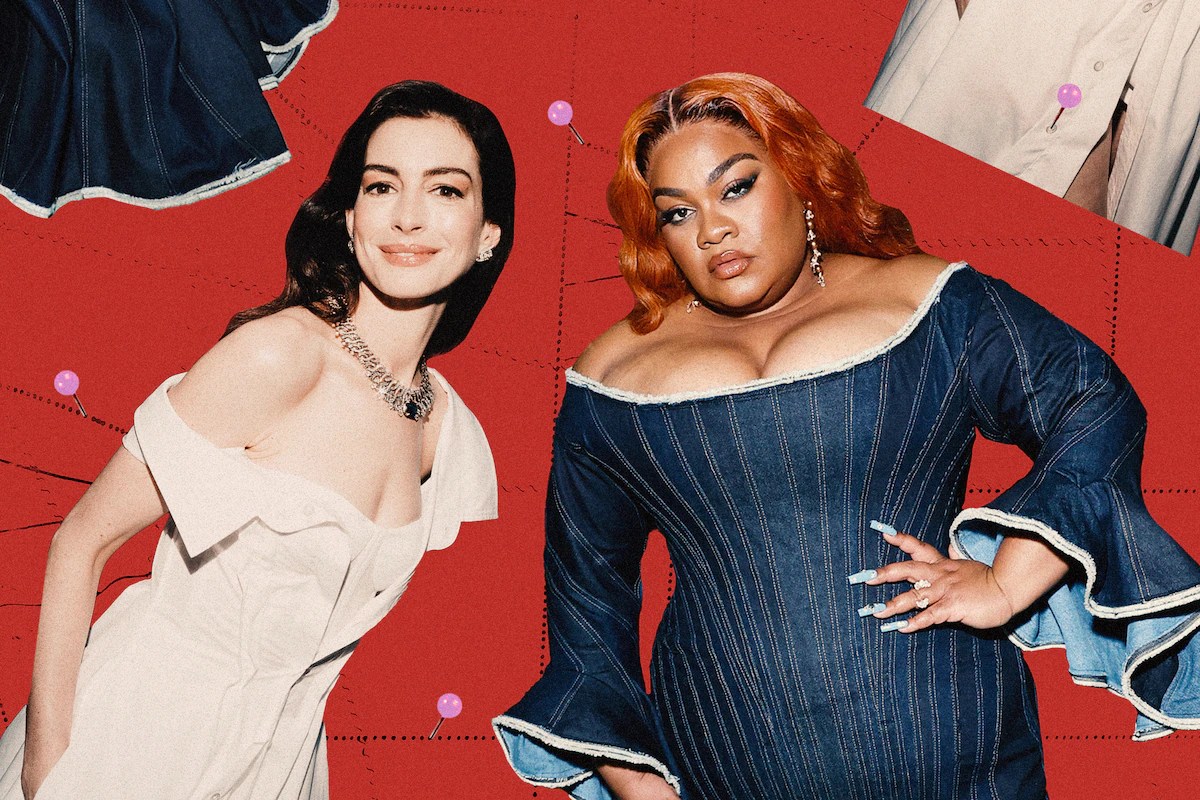
Marvelization of fashion – (Illustration by María Alconada Brooks/The Washington Post; Cindy Ord/Getty Images for The Met Museum/Vogue; Lucas Possiede/Getty Images; iStock)
Perspective by Rachel Tashjian
What fashion brands increasingly create are not products or ideas that tell consumers what to wear or buy. What are they even selling anymore?
“We’re basically selling the selling of things,” she said, laughing. “We’re not selling the thing. We’re selling the selling.”
More and more, what fashion brands create are not products or ideas that tell consumers what to wear or buy. Instead, fashion has transformed into a system that prizes narrative and content over clothing, at best, and, at worst, a spectacle meant to provoke, distract or even shield us from reality.
Of course, fashion has aligned itself with celebrities for decades to give its niche and often bewildering ideas a broad audience. (Remember Catherine Deneuve shilling Chanel No. 5?) And celebrities, through clothes, have been able to give the world something personal — style, or something like it — without truly having to reveal anything at all.
But the fashion business is no longer satisfied with being a leech on Hollywood’s skin. François-Henri Pinault, the owner of Kering (and husband of actress Salma Hayek), bought the Creative Artists Agency last year, while Bernard Arnault, the CEO of LVMH, has launched his own entertainment studio, 22 Montaigne. Last summer, the fashion executive Ana Andjelic told me that she thinks of a brand like a Marvel movie. She was in the midst of reinventing Esprit, the colorful 1980s mall label, and piles and piles of clothes in bright crayon tones were mounded all around us. “You plug the ‘characters’” — the clothes — “into different stories,” or marketing moments, she said. “You create a lot of buildup, the same way you market a movie,” she elaborated in an interview more recently.
Gap Inc.’s new CEO, Richard Dickson, tasked with the daunting salvation of the flagging fashion giant plus Banana Republic, Old Navy and Athleta, came from Mattel, where he successfully oversaw the transformation of Barbie from a dated toy to a cheeky, semi-feminist pop culture Hollywood phenomenon.
He has put it more bluntly. “Fashion is entertainment,” he said in a recent interview with the Wall Street Journal. “The story around a brand and what it stands for is more powerful than any one product.”
All the while, the seemingly simple task of finding a T-shirt, a button-up or a stylish pair of pants has become impossible. (If you want the fluid khakis and T-shirts that the Gap was once known for, you would have better luck finding them at the Row for $1,150 and $350, respectively.) Clothes seem almost irrelevant.
Jacquemus’ most recent show was more notable for its ingenious memes — a guy ironing on a paddleboard on the glittering water, a woman taking a chair lift with absurd stacks of Jacquemus shopping bags and boxes — than the garments. One of LVMH’s star designers is musician Pharrell Williams. But can you close your eyes and picture his designs? One of the most viral moments in fashion this year was Jeremy Allen White in an ad for Calvin Klein — taking off his clothes.
Fashion is now dinner and a movie — but you leave without eating any of the courses.

Richard Dickson


